Is blackjack insurance worth it?
No. Insurance pays 2 to 1, so it only breaks even if the dealer has blackjack more than 1 time in 3. In OpalRove's six-deck blackjack, the dealer's hidden card is a ten-value card about 30.87% of the time when an ace shows. Insurance returns about 92.60%, a 7.40% house edge: between 91.26% and 93.20% depending on your own cards.
How insurance works
| $10 bet, $5 insurance | Your hand | Insurance | Overall |
|---|---|---|---|
| Dealer has blackjack | -$10 | +$10 | $0 |
| Dealer has no blackjack | Plays on | -$5 | -$5, then your hand |
| You have blackjack too, dealer has blackjack | Push | +$10 | +$10 (this is even money) |
When the dealer's face-up card is an ace, the table offers insurance before the dealer checks for blackjack. It is a side bet that the hidden card is a ten, jack, queen or king.
Insurance costs half your bet and pays 2 to 1. Then the dealer checks. With blackjack, the hand ends at once and the insurance pays; without it, the insurance is lost and you play your hand as normal.
The odds of a dealer blackjack under an ace
| Your two cards | How often | Dealer has blackjack | Insurance returns | House edge |
|---|---|---|---|---|
| No ten-value card | 47.72% | 31.07% | 93.20% | 6.80% |
| One ten-value card | 42.82% | 30.74% | 92.23% | 7.77% |
| Two ten-value cards | 9.46% | 30.42% | 91.26% | 8.74% |
| All hands | 100% | 30.87% | 92.60% | 7.40% |
Six decks hold 312 cards, and 96 of them count ten. With the dealer's ace and your two cards out, 309 cards are left.
To break even at 2 to 1, at least 103 of those 309 cards would have to count ten. There are never more than 96, and fewer when you hold tens yourself.
Even money: insurance when you have blackjack
| $10 blackjack against a dealer ace | You win |
|---|---|
| Take even money | $10.00 every time |
| Decline: dealer has no blackjack (69.26%) | $15.00 |
| Decline: dealer has blackjack (30.74%) | $0 (push) |
| Decline: on average | $10.39 |
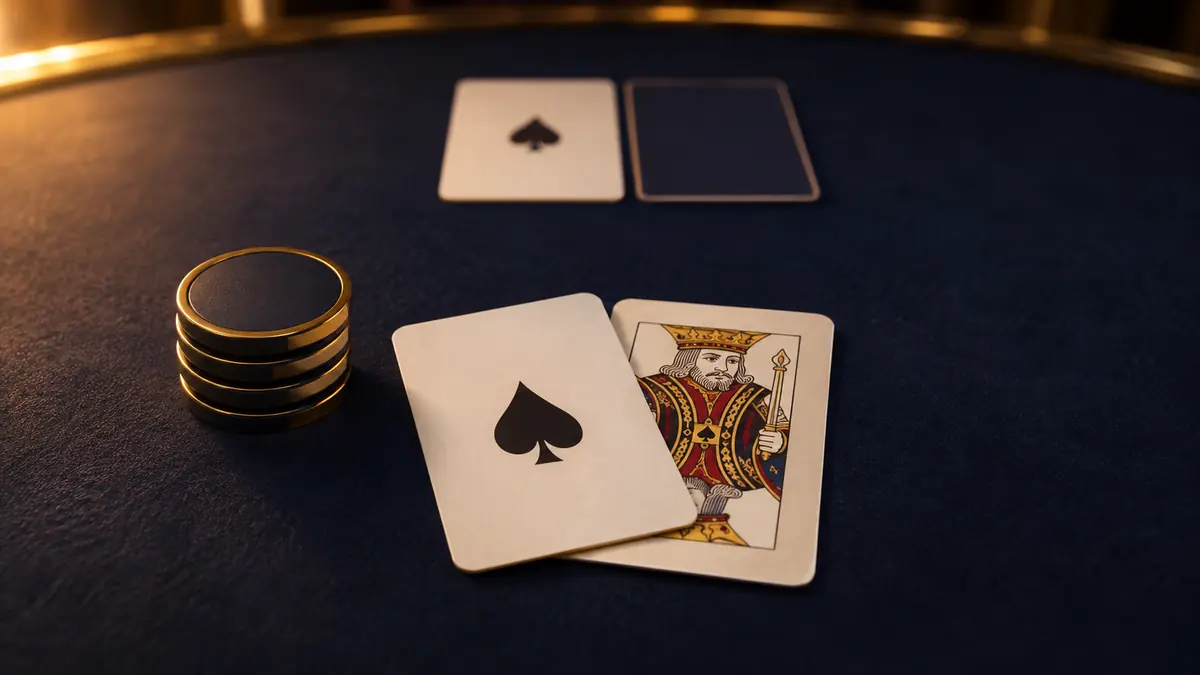
If you hold blackjack and the dealer shows an ace, the table offers even money instead. Take it and your blackjack is paid 1 to 1, whatever the dealer has.
Decline and you are paid 3 to 2 unless the dealer also has blackjack, which makes it a push. With your ace and ten out, that happens 30.74% of the time.
- Even money is a sure win, but over the long run it costs about 39 cents on a $10 bet, 3.9% of the stake.
- It is the same bet as insurance, priced the same way, so the same house edge applies.
Why insurance feels safe
The name suggests protection for a good hand. But the bet has nothing to do with your cards: it only asks whether the hidden card is a ten.
Insuring a strong hand does not make the bet any better. Holding 20 made of two ten-value cards actually makes it worse: two of the tens the dealer needs are in your hand, so the dealer has blackjack 30.42% of the time, the lowest of the three cases above.
Counting cards does not change that here. Each hand is dealt from six freshly shuffled decks, so earlier hands tell you nothing about the next hidden card.
What basic strategy says
Basic strategy never takes insurance or even money. In practice mode the table's Best play hint points to No insurance, except when you hold blackjack, where the choice is left to you.
Played with basic strategy and no insurance, OpalRove's blackjack returns about 99.6% over the long run. Insurance mixes a 7.40% edge into that.
The dealer shows an ace about 1 hand in 13, so you will meet the question often. Practice mode lets you try it free first.
Questions
- Is insurance ever a good bet in blackjack?
- Not at OpalRove. It needs more than a third of the remaining cards to count ten, and with six decks shuffled for every hand there are at most 96 in 309, 31.07%.
- Should I take even money with blackjack?
- It is a guaranteed win of 1 to 1, but declining averages $10.39 on a $10 bet against $10.00, so even money costs about 3.9% of your stake over the long run.
- How much does blackjack insurance cost?
- Half your bet. On a $10 hand insurance is $5, and on a 50 cent hand it is 25 cents.
- What does insurance pay?
- 2 to 1. A $5 insurance bet returns $15 if the dealer has blackjack, which makes up for the $10 hand you lose.
- Does the dealer check for blackjack?
- Yes, under an ace or a ten-value card, before you play your hand. If the dealer has blackjack the hand ends at once, so you never lose a double or a split to it.
Play Blackjack free in practice
More guides
Updated 2026-11-09.